Fingal Creative Sustainability Programme
Fingal County Council Environment Department
2024–2025; recommissioned for 2026–2027
Secondary schools across Fingal
As Creative Sustainability Programme Producer and Lead Artist, I devised and deliver a sustained arts and environmental programme for secondary-school students across Fingal. The programme was originally developed through an open-call proposal in collaboration with Fingal County Council’s Environment Department and was recommissioned for the 2026–2027 academic year following the first cycle.
The programme brings together environmental literacy, creative expression and collaborative decision-making. Through discussion, research and practical art-making, students explore environmental concerns within their schools and communities and consider how art can communicate ideas, transform shared spaces and encourage positive action.
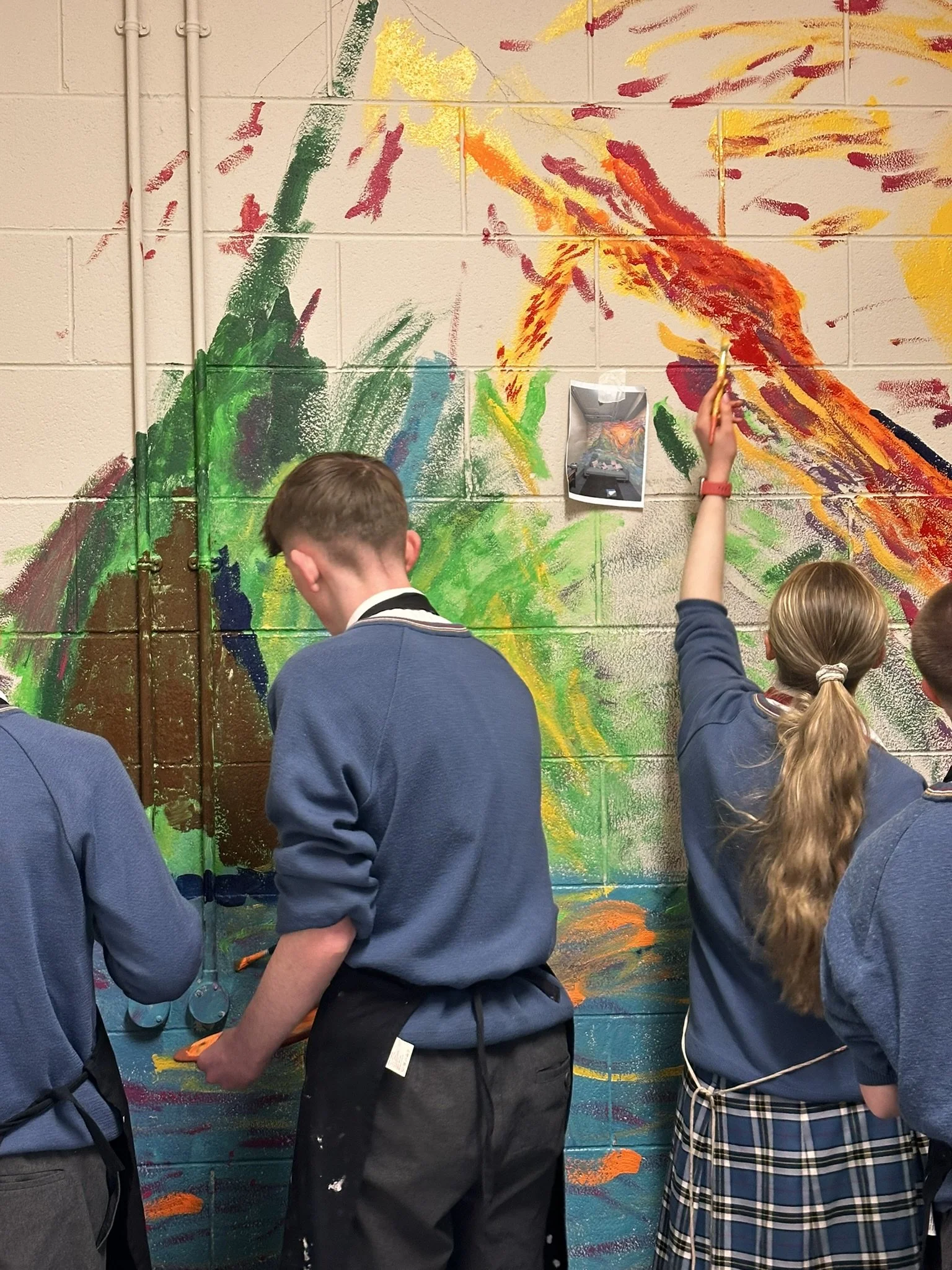
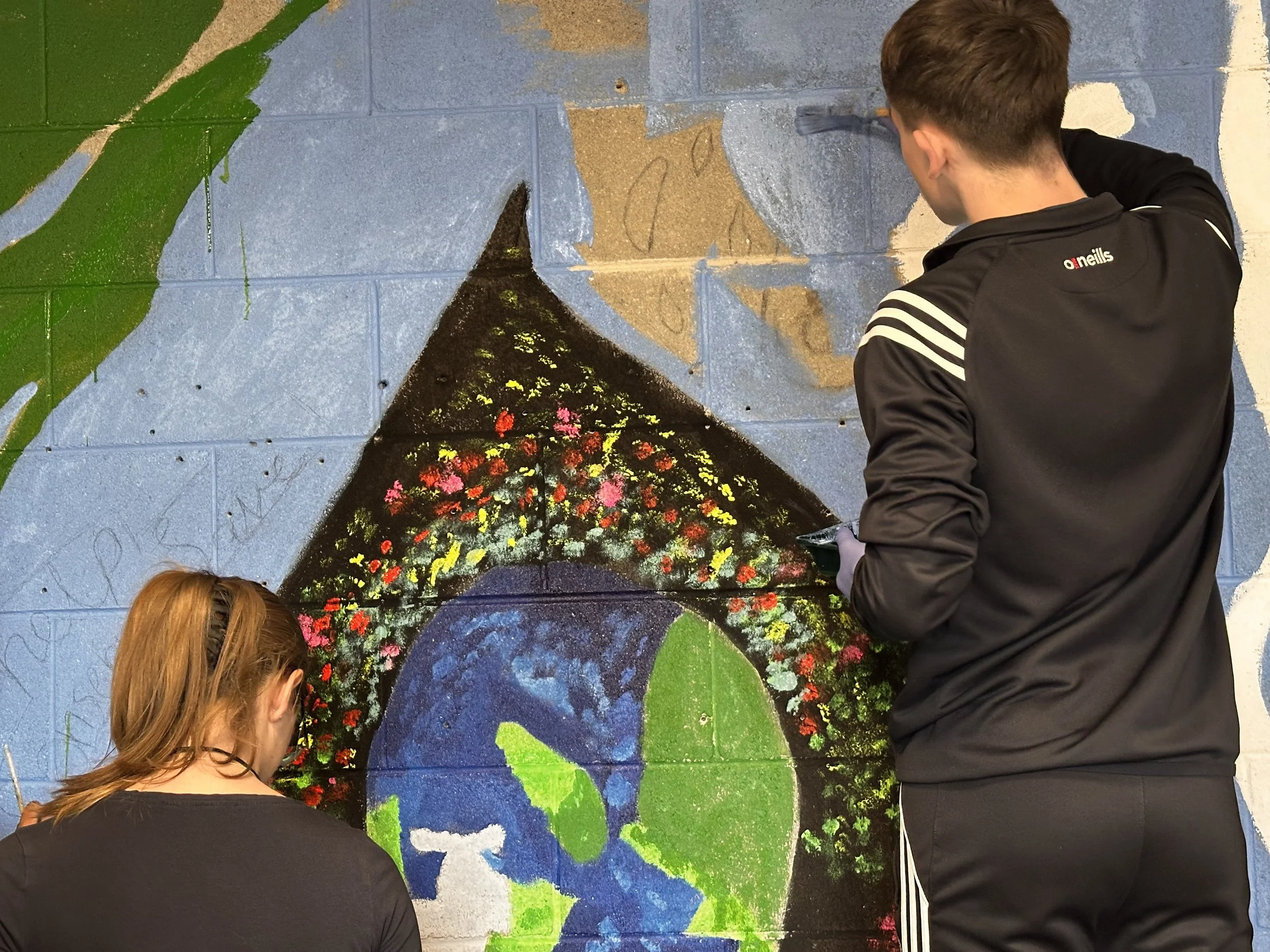
The first cycle was delivered across five secondary schools, engaging approximately 99 students. Each participating group worked through a series of connected stages, moving from discussion and experimentation to the development of a collaborative artwork rooted in the priorities and identity of their school community.
My Approach
My approach is listening-led, responsive and process-based. I begin by creating space for students to share what matters to them, drawing on their lived experiences of their school, neighbourhood and environment.
Rather than arriving with a predetermined design, I introduce accessible creative exercises that encourage observation, conversation and collective thinking. Students are supported to investigate ideas, make connections, express different perspectives and decide together what they want their finished work to communicate.
The sessions combine clear guidance with genuine creative choice. I see the students as artists, researchers and collaborators whose ideas shape both the direction of the project and its final outcome. My role is to facilitate that process, help the group bring different contributions together and provide the practical support needed to realise their collective vision.
Exploring Environmental Issues
The programme creates an age-appropriate space in which students can discuss environmental concerns without becoming overwhelmed by them. Topics raised have included pollution, litter, water, biodiversity, wildlife and animal welfare, fast fashion, overconsumption, rising sea levels and the environmental impact of new technologies.
Students also explore graffiti and its effects on shared spaces, considering the differences between graffiti, vandalism, street art and community murals. These conversations open wider questions about identity, belonging, ownership, public space and whose voices are represented within a community.
Feelings of worry, frustration or powerlessness are acknowledged as valid responses to environmental change. Through collaborative art-making, students are encouraged to transform these feelings into communication, imagination and achievable forms of action. The emphasis is not on placing responsibility for environmental problems on young people, but on strengthening their sense of voice, connection and agency.
Programme Structure
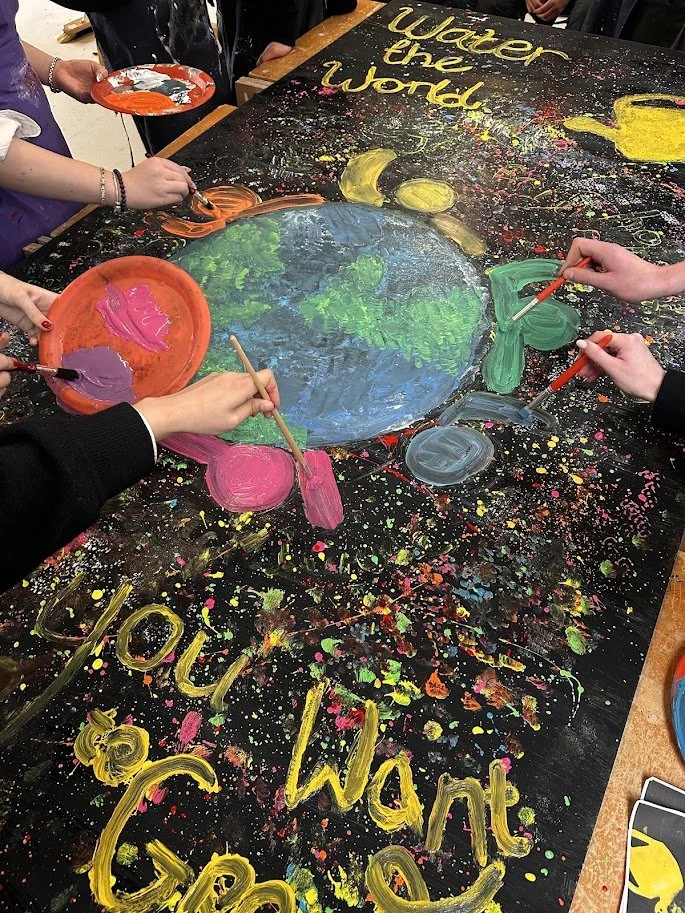
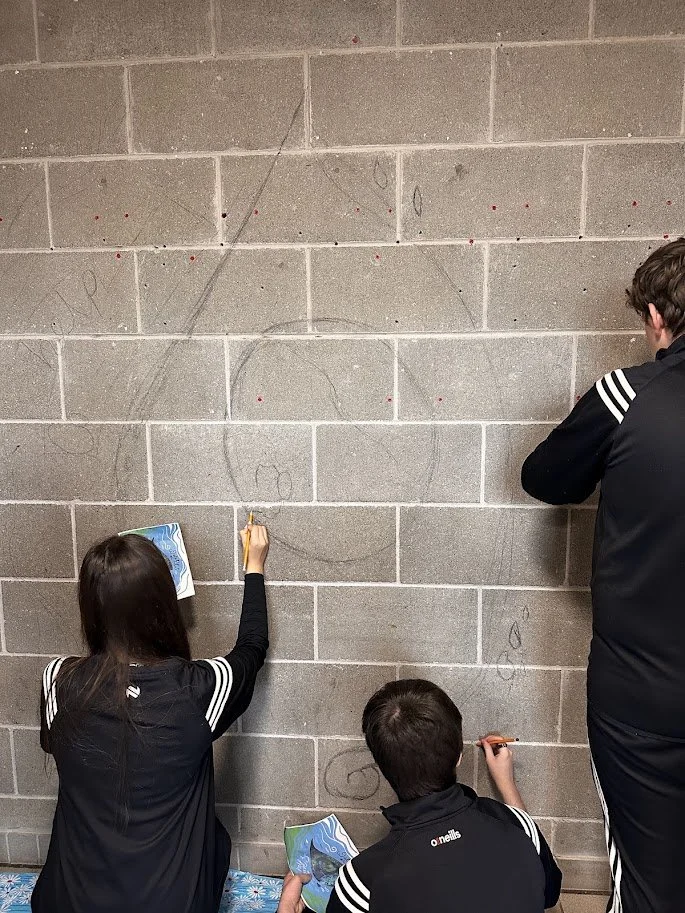
The programme begins with an introductory workshop combining discussion, drawing, visual research, icebreakers and collaborative exercises. Activities help students identify local environmental priorities, examine how images communicate and begin developing a shared visual language for their project.
Between workshops, students continue gathering ideas and discussing possible directions with their teachers. A short follow-up meeting supports the development of these ideas before I bring the students’ contributions together into a workable collaborative design.
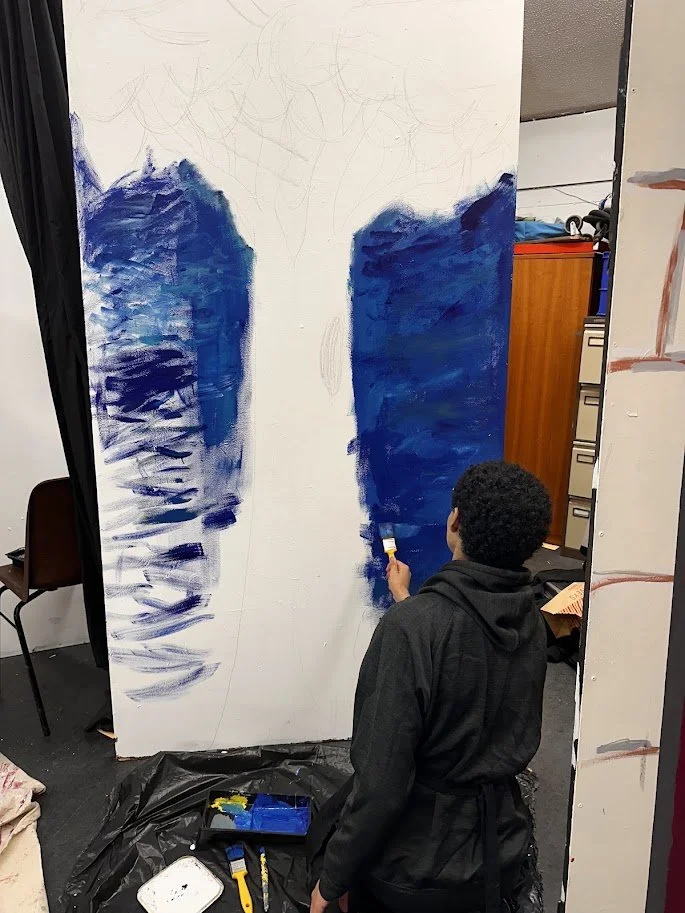
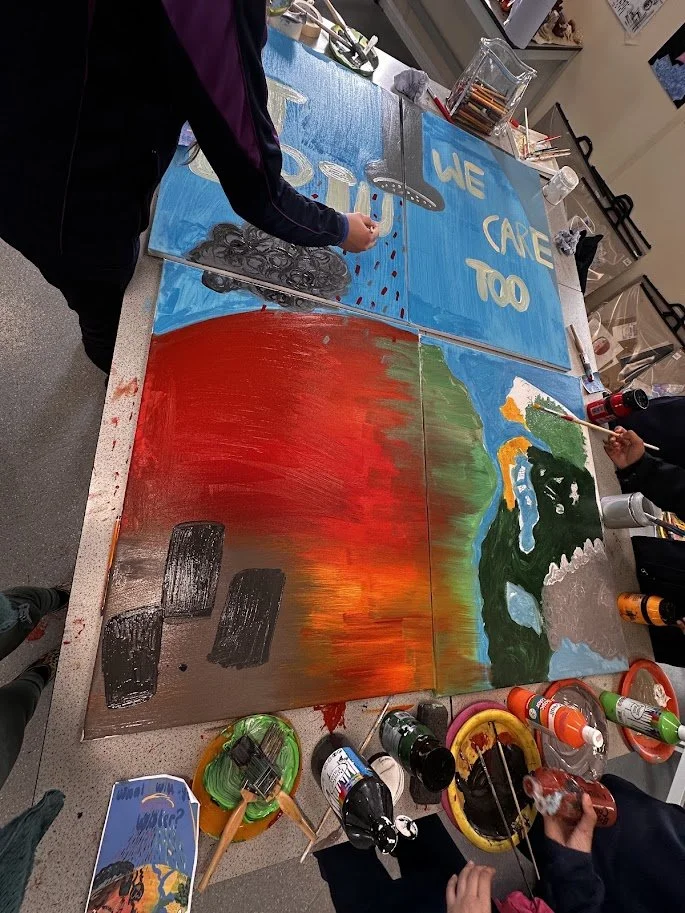
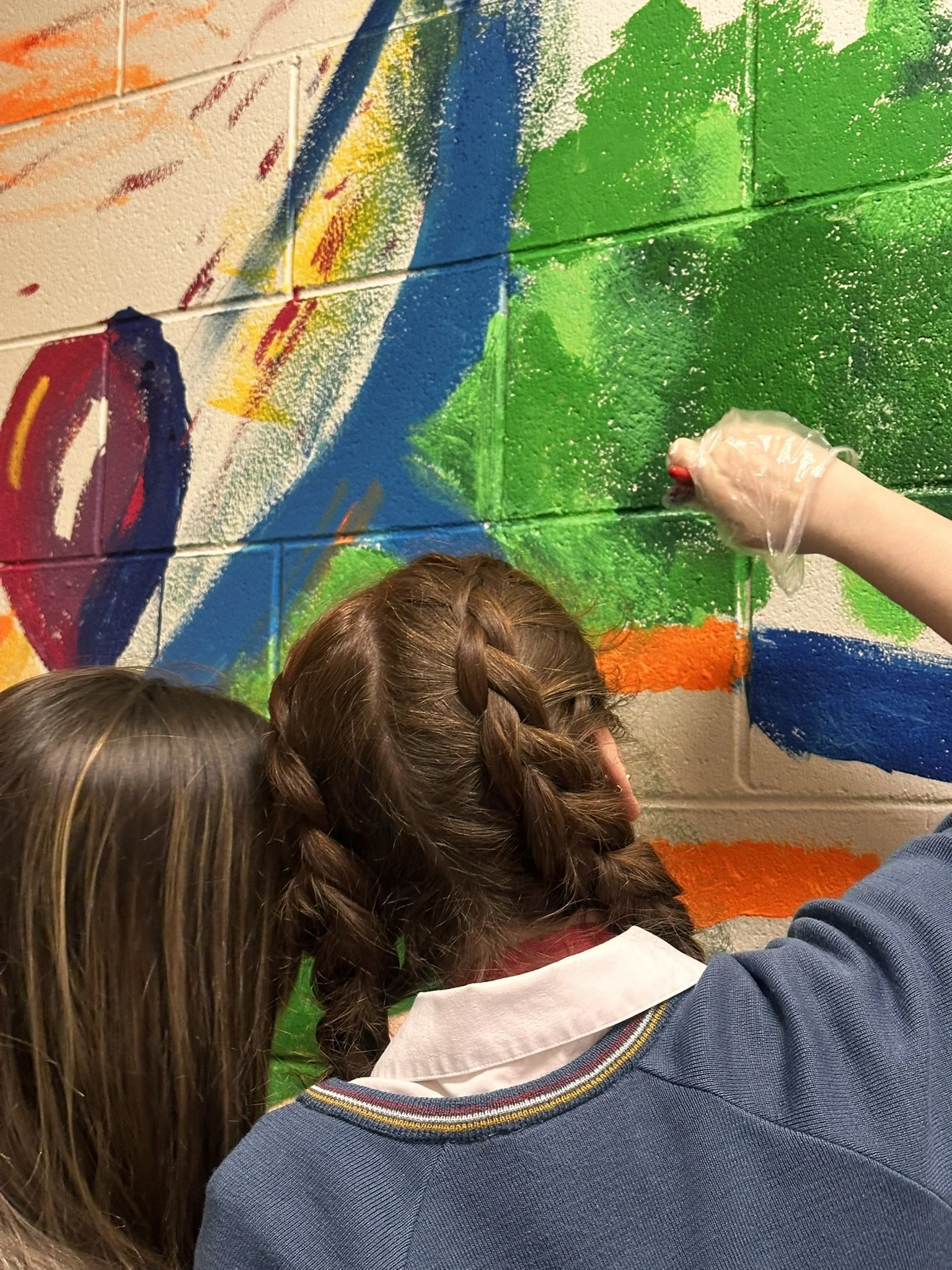
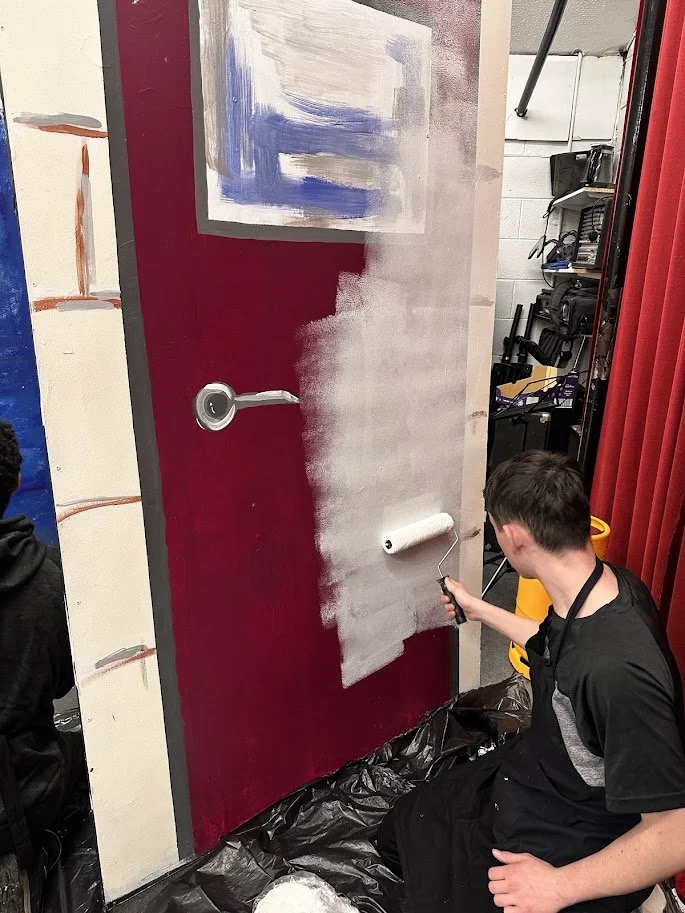
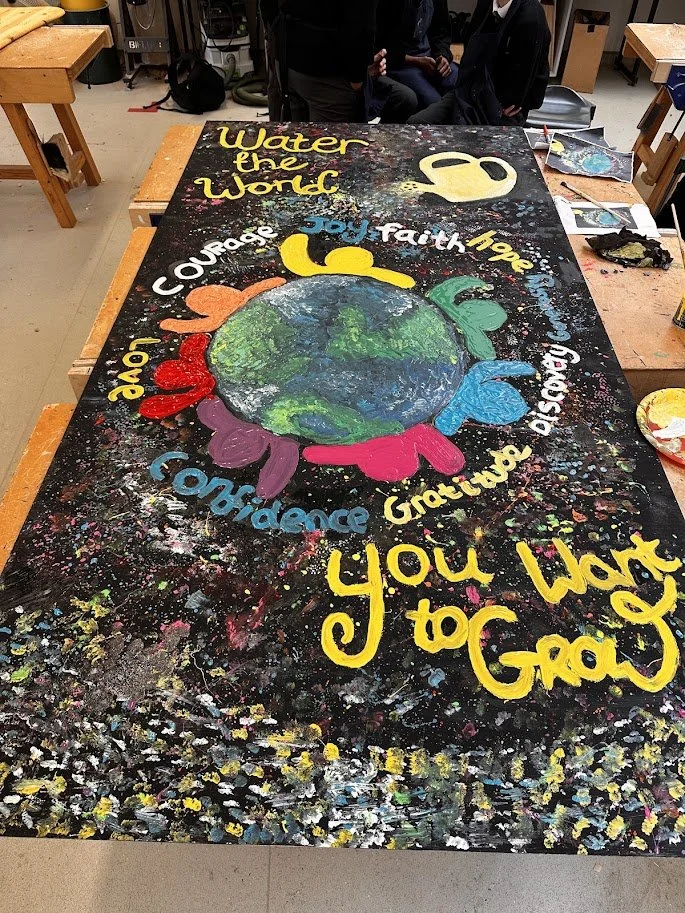
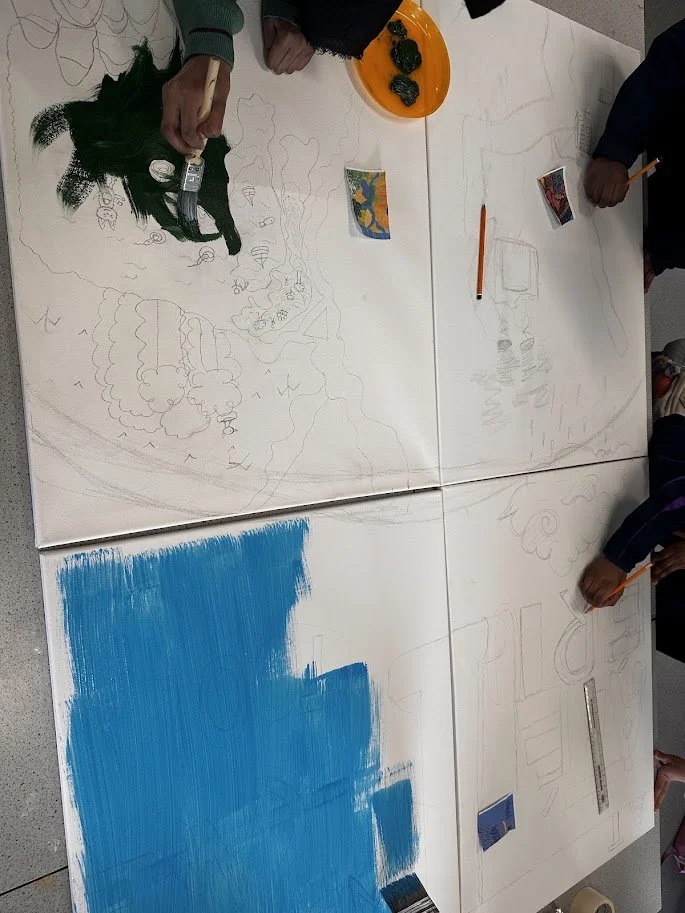
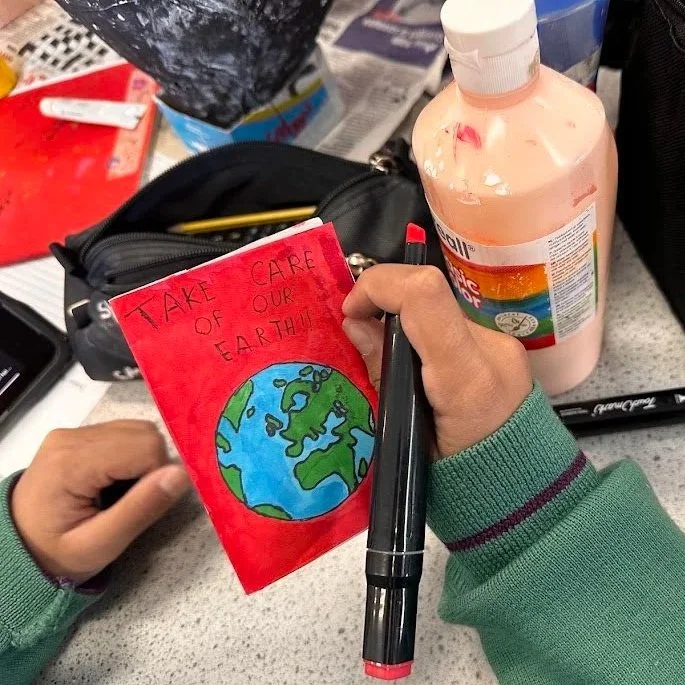
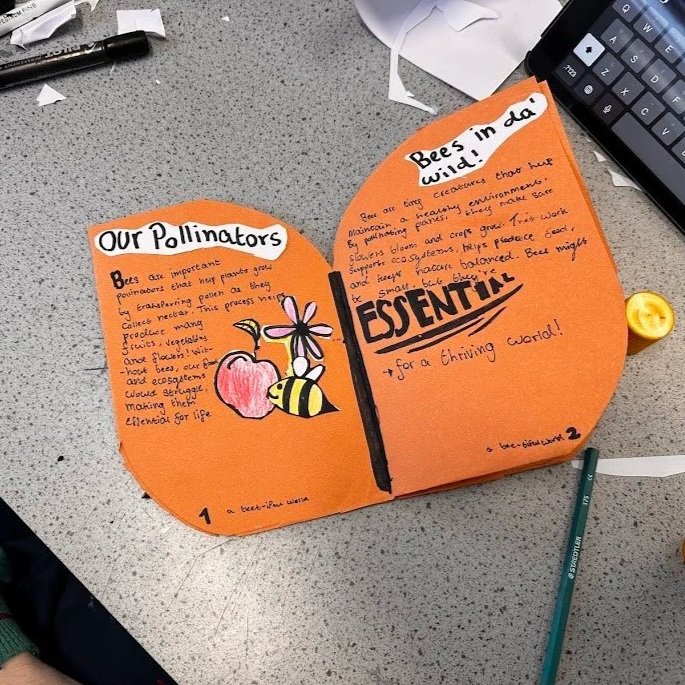
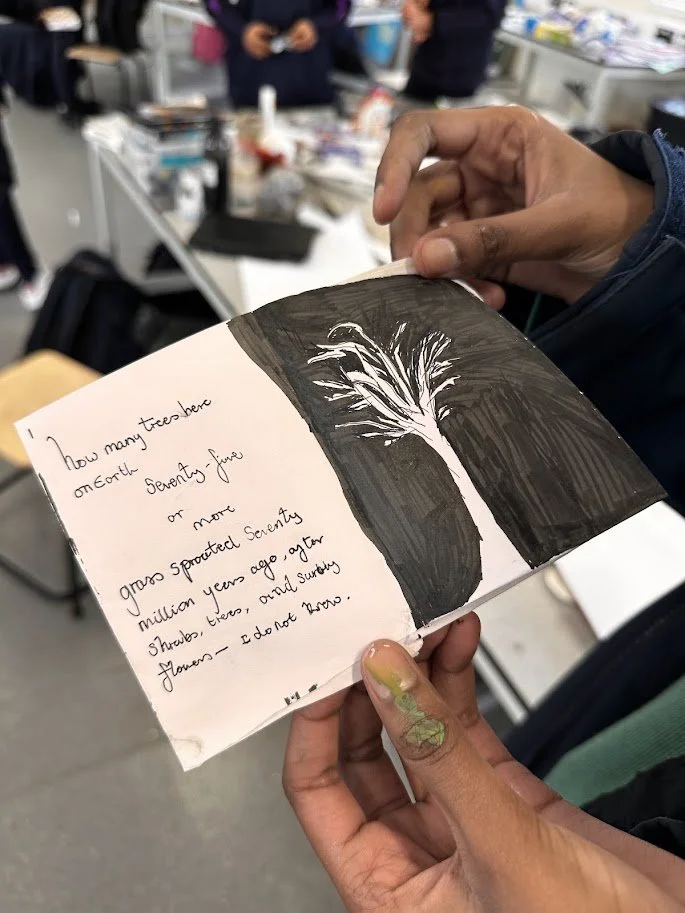
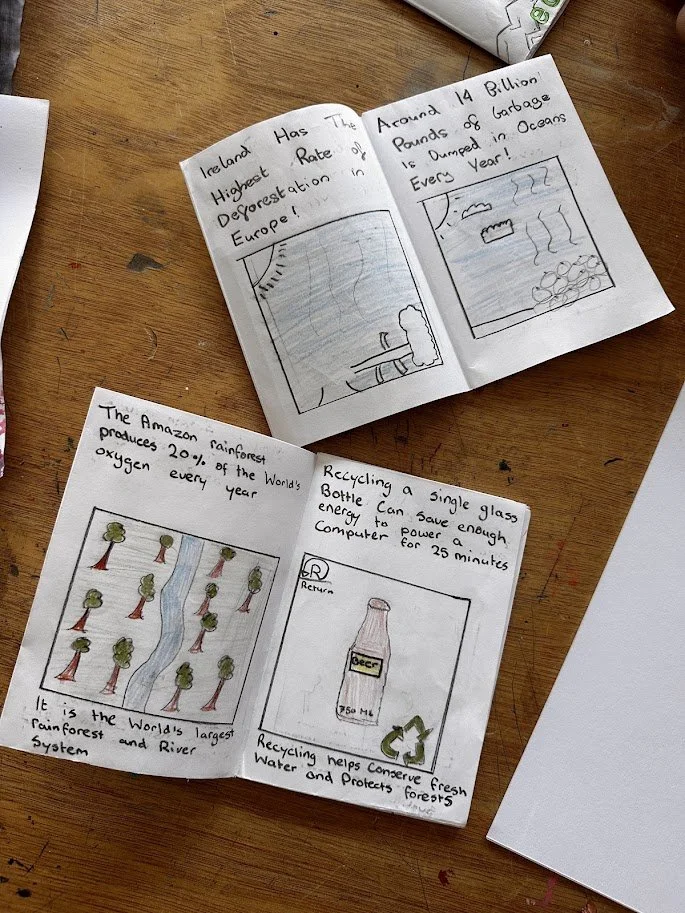
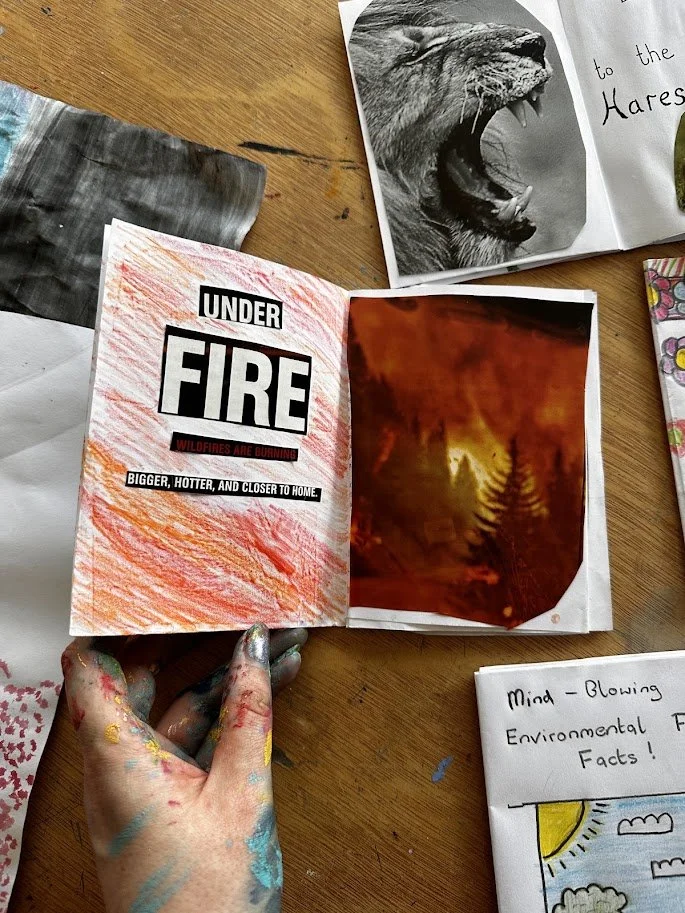
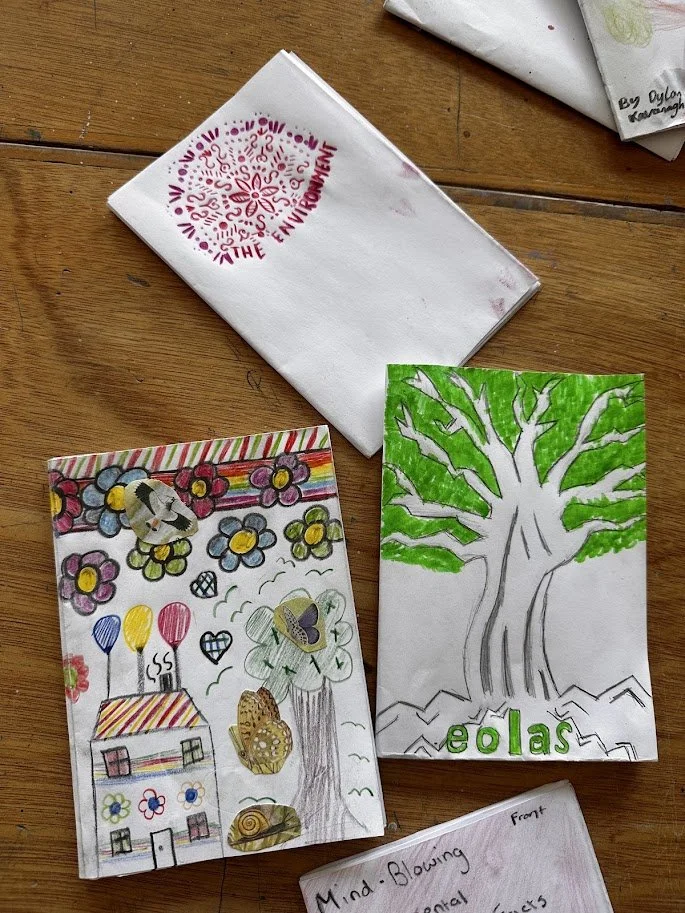
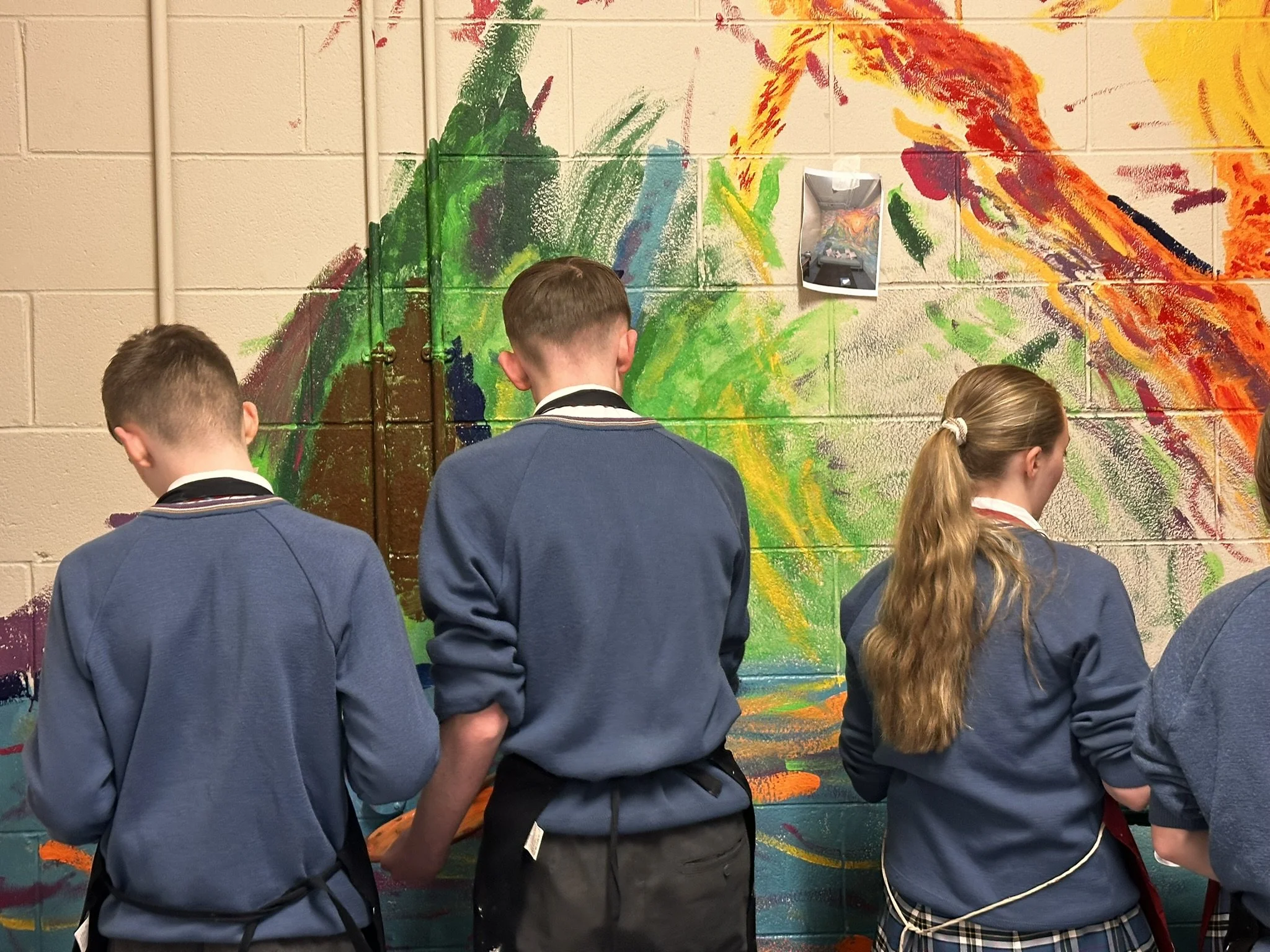
The programme culminates in an extended practical workshop during which students create their mural and accompanying individual or small-group zines. Where a permanent wall is not available, the mural can be created on portable canvases or another temporary surface. This flexibility allows each project to respond to the needs, permissions and physical environment of the participating school.
Creative Outcomes
The 2024–2025 programme resulted in five distinct collaborative projects shaped by the interests and circumstances of each school community.
Across the programme, students took part in environmental discussion, drawing, collaborative design, zine-making, mural techniques, surface preparation, painting, sealing and collective decision-making. Written material and moving-image work have also been used to document and extend the projects, with school launches and community celebrations providing opportunities to share the finished outcomes.
Although the murals and other artworks are important visible outcomes, the programme is equally concerned with the process behind them: listening to one another, negotiating ideas, making collective decisions and seeing individual contributions become part of something shared.
Through the programme, creativity becomes a way for young people to examine environmental challenges, communicate what matters to them and imagine more caring, connected and sustainable futures.